Dog Pee Is Killing Your Lawn — Here’s How to Fix It (Without Getting Rid of Your Dog)
Introduction
You love your dog.
You just don’t love what they’re doing to your lawn.
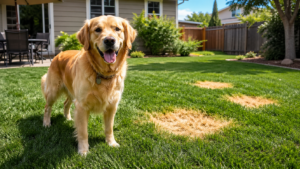
Those random yellow spots?
The dead patches that seem to appear overnight?
Yeah… that’s probably not bad luck.
It’s one of the most common lawn problems homeowners deal with, and almost nobody explains it clearly.
The good news is you don’t have to choose between a healthy lawn and your dog.
You just need to understand what’s actually happening.
Why Dog Pee Damages Grass
It’s not as simple as “dog pee is bad.”
The real issue is what’s inside it.
Dog urine is high in nitrogen.
And while nitrogen is actually a key ingredient in fertilizer, too much of it in one spot burns the grass.
That’s why you often see:
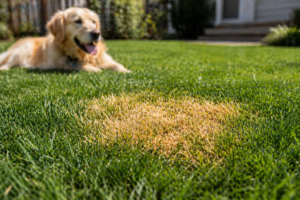
Yellow or brown patches
Dark green rings around the edges
Spots that keep getting worse over time
It’s basically an overdose of something that’s normally helpful.
Why Some Spots Look Worse Than Others
Not every part of your lawn reacts the same way.
That’s why damage can look random.
Several things affect how severe the spots are:
Soil type (clay vs sandy soil)
How hydrated your dog is
How often they use the same area
Grass type
If your dog goes in the same place repeatedly, the damage builds up fast.
🐕 Why Female Dogs Often Cause More Visible Damage
You might hear people say female dogs are “worse” for lawns.
That’s not exactly true, but there’s a reason behind it.
Female dogs tend to squat and urinate in one concentrated spot.
Male dogs are more likely to spread it out in smaller amounts.
So it’s not about the dog—it’s about the pattern.
Concentrated urine = higher nitrogen in one place = more damage.
The Biggest Mistake People Make
Most homeowners ignore the problem until their lawn looks patchy.
Then they try to fix it all at once.
By that point, the grass is already damaged or dead.
And quick fixes don’t work.
The key is catching it early and changing a few habits.
🚿 The Easiest Immediate Fix
If you only take one thing from this post, make it this.
Water the area right after your dog goes.
That’s it.
Diluting the urine reduces the nitrogen concentration.
Which means less damage to the grass.
Simple approach:
Keep a hose nearby
Lightly rinse the area within a few minutes
You don’t need to soak it—just dilute it
This alone can make a huge difference.
🌱 How to Repair Existing Dead Spots
Once grass is fully burned, it won’t come back on its own.
You’ll need to repair it.
Step-by-step:
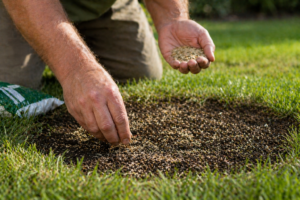
Rake out the dead grass
Loosen the soil underneath
Add fresh soil or compost
Apply grass seed
Water consistently until it grows in
Patience matters here.
Most people give up too early and assume it didn’t work.
🌾 Choosing Grass That Can Handle Dogs
Some grass types recover faster than others.
If you have a dog, this matters a lot.
More durable options:
Tall Fescue (deep roots, drought tolerant)
Perennial Ryegrass (fast repair)
More sensitive options:
Kentucky Bluegrass (looks great but can struggle with damage)
If your lawn constantly has issues, it might not be your routine.
It could be the grass itself.
🐾 Should You Create a Designated Potty Area?
This is one of the best long-term solutions.
Instead of letting your dog use the entire yard, you guide them to one area.
Benefits:
Protects the rest of your lawn
Keeps damage contained
Easier to maintain and repair
You can use:
Mulch
Gravel
Artificial turf
Or even a small section of hardy grass
It doesn’t have to be complicated.
Just consistent.
🧠 Training Your Dog (Without Making It a Big Deal)
You don’t need intense training.
Just a little consistency.
Tips:
Take your dog to the same spot every time
Reward them when they go there
Be patient (this takes a little time)
Over time, most dogs naturally stick to that area.
🌿 Are There “Lawn-Saving” Dog Supplements?
You might see products that claim to prevent lawn damage.
These usually aim to reduce nitrogen levels.
Some can help slightly.
But they’re not a magic fix.
Also, always check with your vet before adding anything to your dog’s diet.
Your dog’s health comes first.
🌼 Pet-Safe Lawn Care Matters
If you’re treating your lawn, you also need to think about your dog.
Some fertilizers and weed treatments can be harmful.
General rules:
Avoid harsh chemicals when possible
Follow product instructions carefully
Keep pets off treated areas until it’s safe
There are plenty of pet-friendly options available now.
You don’t have to compromise.
💧 Hydration Makes a Bigger Difference Than You Think
The more hydrated your dog is, the more diluted their urine will be.
Which means less damage to your lawn.
Easy ways to help:
Keep fresh water available at all times
Bring water on walks or outdoor time
Encourage regular drinking
It’s a simple fix that helps both your lawn and your dog.
🌤️ Lawn Health Still Matters
Even with a dog, a healthy lawn is more resilient.
Weak grass gets damaged faster.
Strong grass recovers quicker.
Focus on:
Proper watering (deep, not frequent)
Mowing at the right height
Aeration for soil health
Seasonal care
Think of it as giving your lawn a better defense system.
🧰 Quick Fix Checklist
If your lawn is struggling and you have a dog, start here:
Rinse spots after your dog goes
Repair dead patches with seed and soil
Consider a designated potty area
Choose more durable grass types
Keep your dog hydrated
Use pet-safe lawn products
You don’t need to do everything at once.
Start with one or two changes and build from there.
Why This Problem Is So Common
Most people assume lawn damage is caused by weather or bad luck.
They don’t realize it’s something happening daily.
Dogs aren’t the problem.
It’s just how their biology interacts with your lawn.
Once you understand that, the solution becomes a lot easier.
Final Thoughts
You shouldn’t have to choose between your dog and a good-looking lawn.
With a few simple adjustments, you can have both.
Most fixes are small.
But they add up quickly.
And once you get ahead of the problem, it becomes much easier to manage.
One Response
Hi, this is a comment.
To get started with moderating, editing, and deleting comments, please visit the Comments screen in the dashboard.
Commenter avatars come from Gravatar.